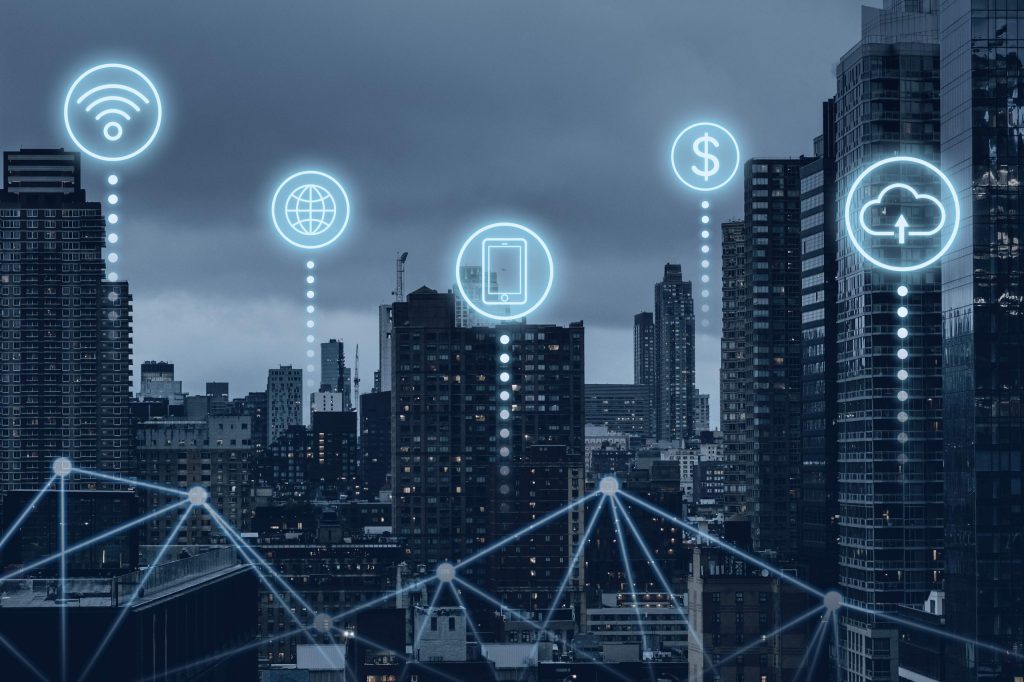
The Internet of Things (IoT) is transforming cities into smart, connected environments that improve quality of life, reduce costs, and enhance sustainability. Here’s how IoT is reshaping urban living.
What Makes a City “Smart”?
A smart city uses IoT devices, sensors, and data analytics to collect real-time information about city operations and citizen needs. This data drives informed decisions that improve urban services, reduce costs, and enhance quality of life.
Key IoT Applications in Smart Cities
Transportation
- Smart Traffic Management: Adaptive traffic signals based on real-time flow
- Public Transit Optimization: Real-time bus and train tracking
- Parking Solutions: Smart parking with mobile payments
- Electric Vehicle Charging: Networked charging station management
Energy Management
- Smart Grids: Intelligent electricity distribution
- Street Lighting: Motion-activated, energy-efficient lighting
- Building Management: Automated HVAC and lighting systems
- Renewable Integration: Optimized solar and wind energy usage
Environmental Monitoring
- Air Quality Sensors: Real-time pollution monitoring
- Noise Monitoring: Acoustic pollution tracking
- Waste Management: Smart bins with fill-level sensors
- Water Management: Leak detection and quality monitoring
Benefits of Smart City IoT
- Cost Reduction: 20-30% savings on operational costs
- Energy Efficiency: 15-25% reduction in energy consumption
- Traffic Improvement: 20-30% reduction in traffic congestion
- Environmental Impact: Significant reduction in carbon emissions
- Citizen Services: Enhanced quality of life and public services
Implementation Challenges
- Data Privacy: Protecting citizen data and privacy
- Interoperability: Ensuring devices from different vendors work together
- Cybersecurity: Securing IoT devices and networks
- Infrastructure Investment: Upgrading legacy city infrastructure
- Citizen Adoption: Encouraging public acceptance and use
Success Stories
Barcelona has reduced water consumption by 25% using IoT sensors. Singapore’s smart traffic system has decreased travel times by 15%. Amsterdam’s smart lighting saves 60% on energy costs while improving public safety.
Future of Smart Cities
As 5G networks expand and edge computing matures, smart cities will become more responsive and efficient. Future developments include autonomous vehicle integration, predictive maintenance of city infrastructure, and citizen-centric mobile apps.
Ready to explore smart city solutions? Our IoT experts can help design and implement connected urban infrastructure for your city or organization.
